BeeLatch ships October 18BeeDash for Android — APK available now: text 415.341.2281
EMGElectric Moto GarageConnected motorcycle tech
Communicating chargers · USA-designed protocol

Bee Charger for SURRON

Two chargers — one for the SURRON Ultra Bee, one for the Light Bee 2 (LB2) — each adjustable from 0.2 A to 17 A, that actually talk to the battery — show you every number on a built-in screen, and bring a pack back when the BMS has latched off. The communication protocol and PCB are designed in the USA, by hand, by an independent builder — not sourced from a grey-market listing and hoped for the best.

Made to order · 1–2 week lead time. Bee Charger Lite $75 · Bee Charger $269 · or reserve one with a $10 deposit. See the shop

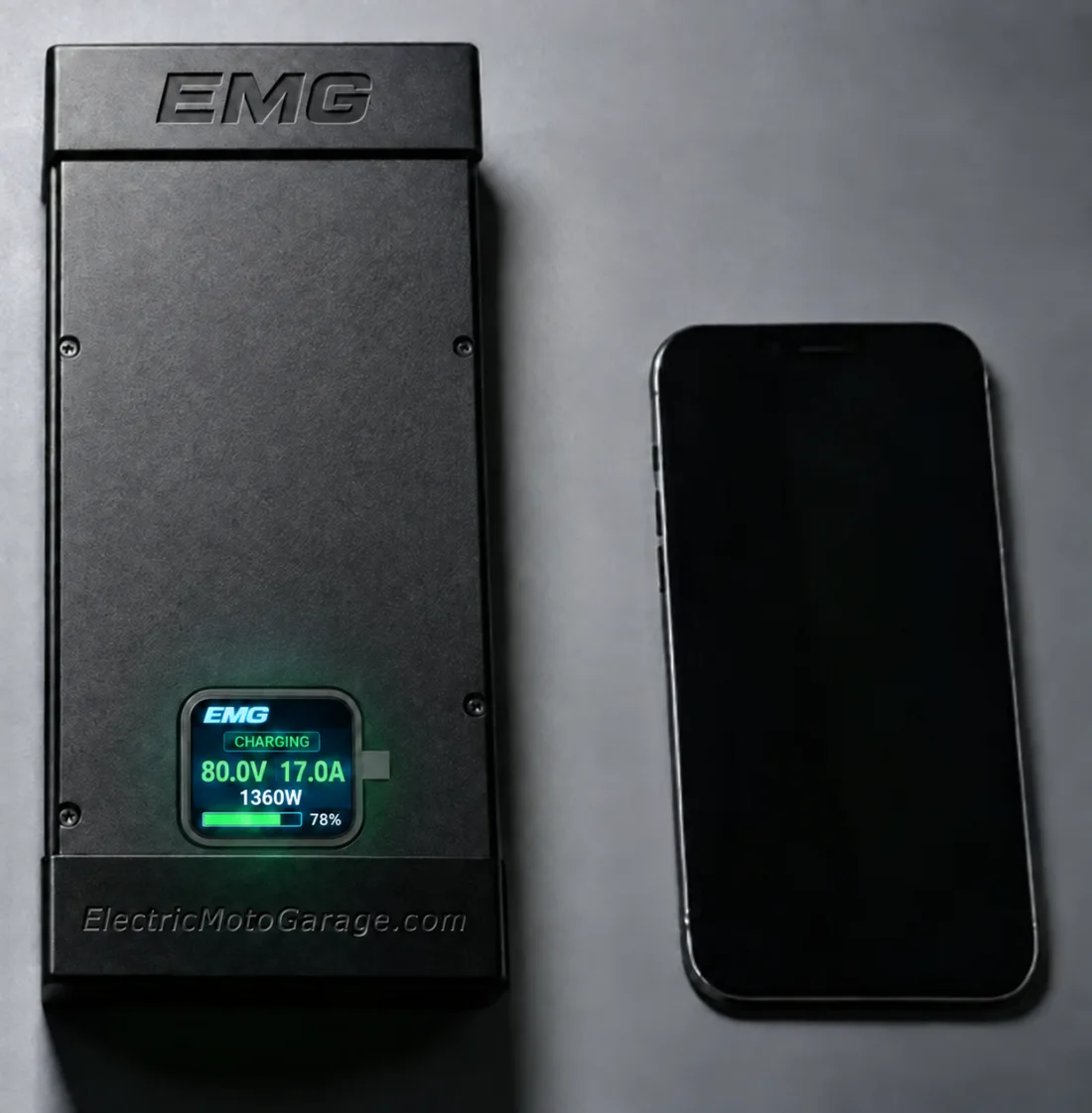
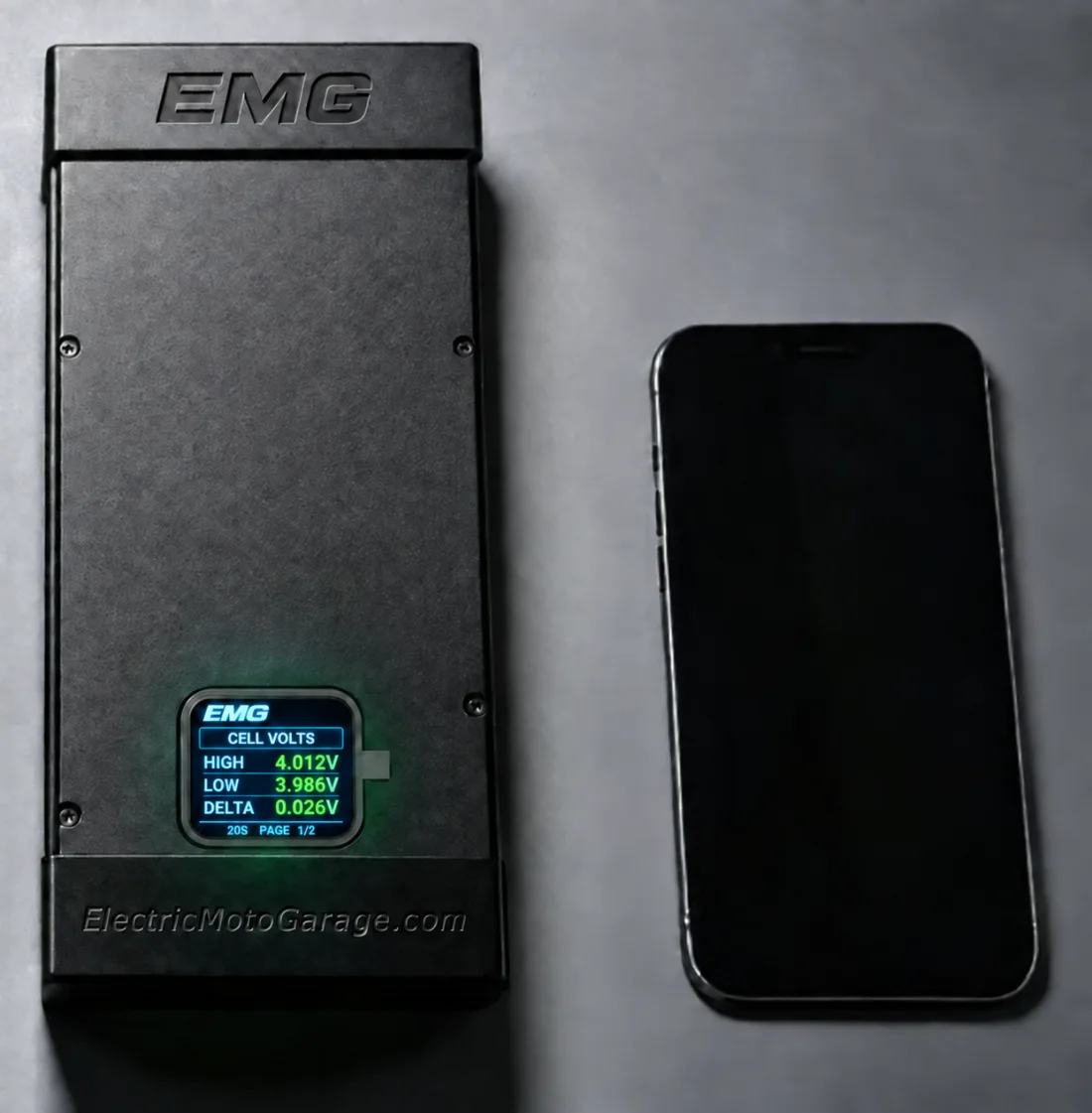
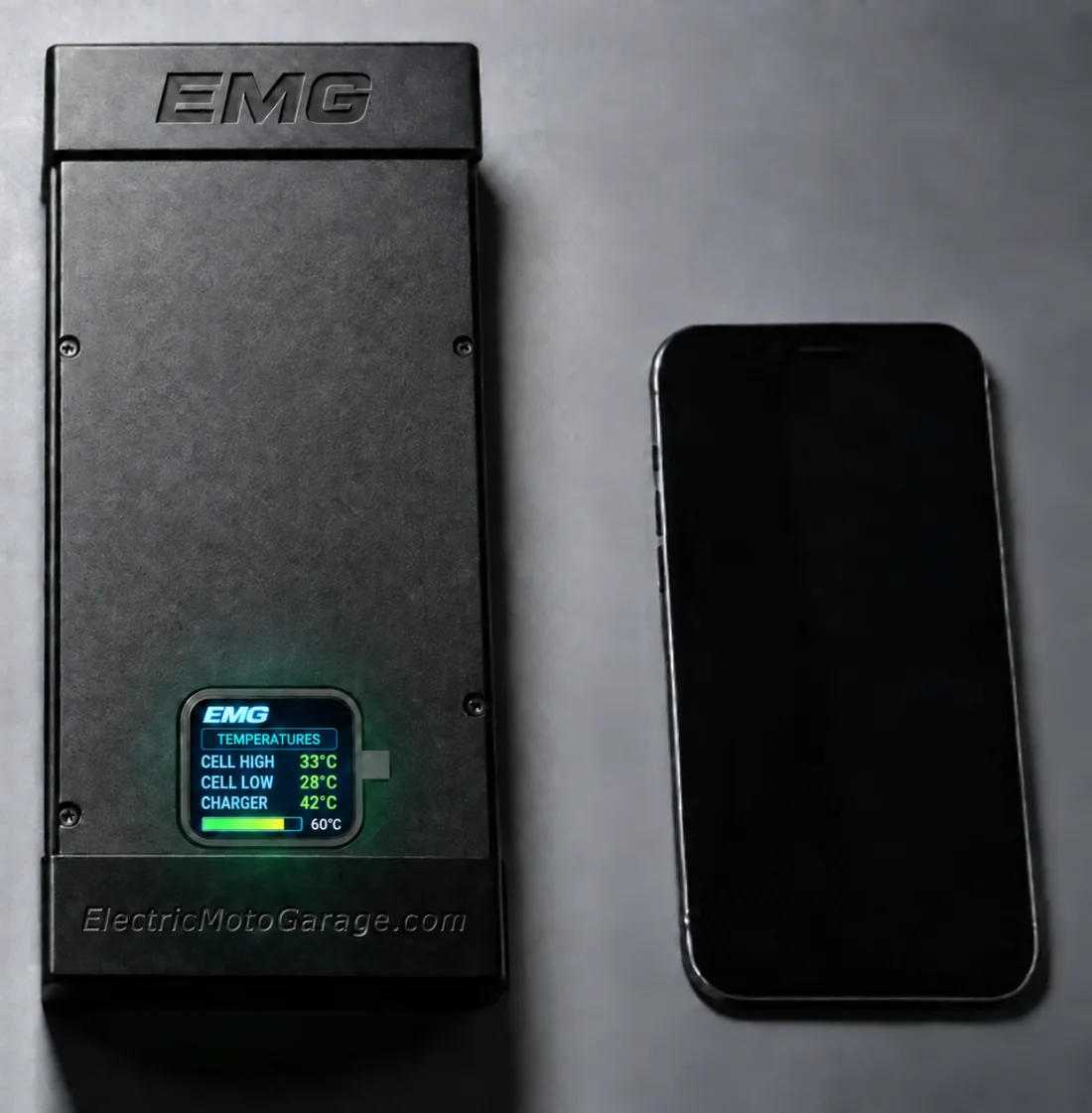
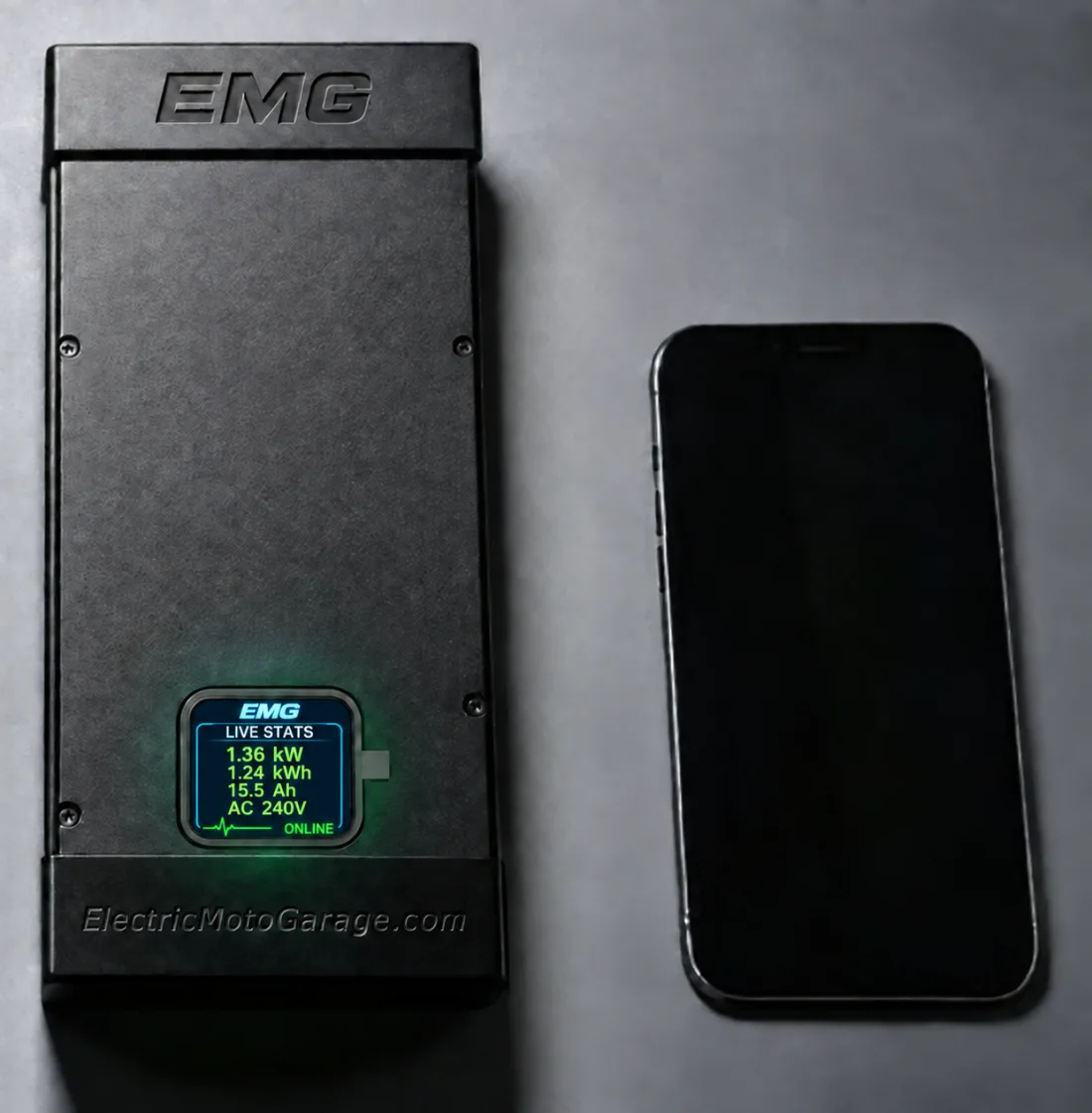
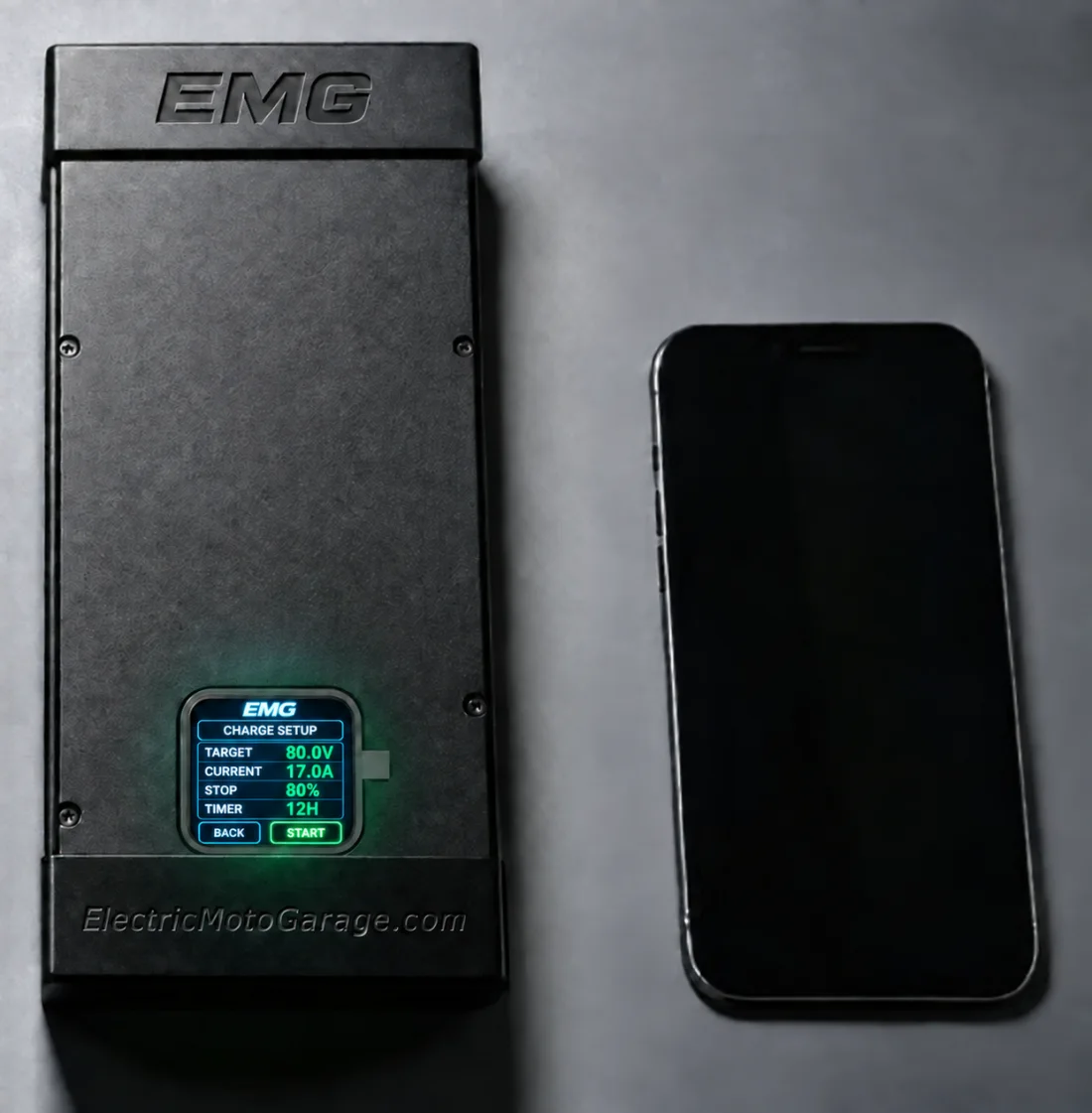
Design renders · shown beside a phone for scale · 1.5-inch display
Talks to the BMSHandshakes with the SURRON battery instead of just pushing volts at it
Designed in the USACommunication protocol and PCB designed by Kevin Graehl
Fits under the seatSized to ride with you, not to live on a bench
0.2 → 17 AFully adjustable — a gentle trickle up to the fastest the pack allows

The fix for a grey-market charger problem

SURRON chargers are built in China, and getting a correct one in the United States usually means an unmarked listing, no documentation, no support, and no idea who to call when it stops working. Substituting a generic power supply is worse — the battery's BMS expects a conversation, not just a voltage.

These chargers hold that conversation. They are, as far as I know, the only chargers that actually communicate with the SURRON battery whose communication protocol and PCB are designed in the USA — by me, Kevin Graehl, in the San Francisco Bay Area. Buying one supports a small local business instead of a reseller chain, at a price meant to stay reasonable.

Protocol designed in the USA. The BMS communication is reverse-engineered, documented and implemented here — the same protocol work behind the Bee Battery Reviver.
PCB designed in the USA. Schematic and board layout done in-house, not a relabeled OEM board.
A real person to ask. One builder, reachable by email, who has the protocol notes and the test bench.
Reasonable pricing. Priced to be worth buying instead of gambling on a marketplace listing. Final pricing is announced at launch.

You can see what it's doing

Most chargers give you a single status LED and leave you guessing. This one has a screen on the case, so the pack stops being a black box: cell voltages, temperatures, energy delivered, and what the charger is drawing from the wall are all readable while it runs.

The screen is 1.5 inches — the carousel at the top of this page shows each page of it at full size.

Cell voltages. Highest cell, lowest cell, and the delta between them — the number that tells you whether a pack is drifting apart, without opening it.
Temperatures. Cell high, cell low, and the charger's own temperature, so you can see heat build before it becomes a problem.
Session stats. Live power, energy delivered, amp-hours returned, and the AC input voltage it's running on.
On-device control. Target voltage, current, a stop percentage and a timer, all set on the charger — no phone, no app, no account.

Values shown in the product renders are illustrative of the interface, not a certified performance test.

Charger and recovery tool

It can also bring a pack back

Leave a bike parked long enough and the cells creep down. Once groups drift toward 3 V and below, the BMS protects itself by latching off — and from then on a normal charger sees nothing, delivers 0.00 A, and gives you no reason why. That is the point where most people are told the pack is dead.

Because this charger talks to the BMS instead of only pushing voltage at it, it can read the pack in that state, show you what every cell group is actually sitting at, and — where the pack is eligible — carry out a controlled recovery at a low current until the BMS is willing to take a normal charge again.

Not every pack qualifies, and that is the honest part: a pack that has collapsed far enough, been physically damaged, or sat wet is not a candidate, and the charger will show you the readings that say so rather than guess.

Sees a latched-off BMS. Reads cell groups when the OEM charger reports nothing at all.
Low-current controlled recovery. Brings eligible packs back up gradually rather than forcing current into them.
Shows you the decision. The cell data is on screen, so the call to attempt recovery is made on readings, not hope.
Deeper diagnosis is a separate tool. For model-specific group analysis—20 on supported Ultra Bee packs and 22 on the confirmed Light Bee 2 pack—plus history and exportable session logs, that is the Bee Battery Reviver.
Recovery has limits, and they matter

Cells that have been deeply over-discharged can be permanently damaged in ways that are not visible from the outside, and charging a damaged lithium pack is a fire risk. A pack that has sat very low for a long period, is swollen, wet, or crash-damaged should not be recovered on the strength of a voltage reading alone. If the numbers on screen look wrong, stop and ask before charging it.

Which charge port do you have?

Every charger model comes in two variants, and the only thing you need to check is the connector on the bike. Lift the seat, look at the charge port, and count the pins.

Tap either photo to enlarge it.

Variant A

4-pin charge input

Four pins in the charge port. This is the long-running SURRON charge connector used across most Ultra Bee bikes before the 2026 model year. If you count four holes, you want the 4-pin variant.

Variant B

6-pin charge input

Six pins — two large pins and four small ones. The big pair carries charge current; the four small pins carry the communication and control signals. This is what you'll find on the 2026 bikes and on the Light Bee 2. If you count six holes in two sizes, you want the 6-pin variant.

Not sure which one you have? Send a photo of your charge port to hello@electricmotogarage.com and I'll tell you.

The lineup

Two adjustable chargers, one for each pack — the Ultra Bee (20 series) and the Light Bee 2 (22 series) — plus the simple Bee Charger Lite. The adjustable Bee Charger sets any charge current from 0.2 A to 17 A, shows what the pack is doing, and communicates with it.

Charge speed is ultimately limited by what the battery's own BMS will accept. Raising that ceiling is active research here, and no charger can exceed it safely without the pack agreeing.

SURRON Ultra Bee

EMG Charger
Ultra Bee

A communicating charger for the 20-series SURRON Ultra Bee pack. Available in both the 4-pin and the 6-pin charge-port variant, so it matches whichever connector your bike shipped with — including the 2026 six-pin port.

0.2 – 17 AFully adjustable

Set exactly the current you want — slow and gentle overnight, or up to 17 A between rides — limited only by what the pack’s BMS will accept.

PlatformSURRON Ultra Bee
Pack configuration20 series
OutputRegulated to the pack's charge setpoint, negotiated over the BMS link
Charge connector4-pin or 6-pin (2026) — choose your variant
Charge currentAdjustable, 0.2 A – 17 A
MountingFits under the seat
AvailabilityMade to order, 1–2 weeks · buy now or preorder · $269
Two variants of this model. Pick 4-pin if your charge port has four pins, or 6-pin if it has two large pins plus four small ones. See Which charge port do you have?
SURRON Light Bee 2 (LB2)

EMG Charger
Light Bee 2

Same six-pin connector as the 2026 bikes, but a different animal underneath: this is a 22-series pack running a higher voltage, so it needs a charger built for that ceiling. Do not substitute an Ultra Bee charger here.

0.2 – 17 AFully adjustable

Set exactly the current you want — slow and gentle overnight, or up to 17 A between rides at 94.16 V — limited only by what the pack’s BMS will accept.

PlatformSURRON Light Bee 2 (LB2)
Pack configuration22 series
Output voltage94.16 V
Charge connector6-pin (two large pins, four small)
Charge currentAdjustable, 0.2 A – 17 A
MountingFits under the seat
AvailabilityMade to order, 1–2 weeks · buy now or preorder · $269
Higher voltage than the Ultra Bee charger. The 22-series pack charges to 94.16 V. The connector looks identical to the 2026 Ultra Bee six-pin port, so order by bike, not by connector, for this one.
New · $75

Bee Charger
Lite

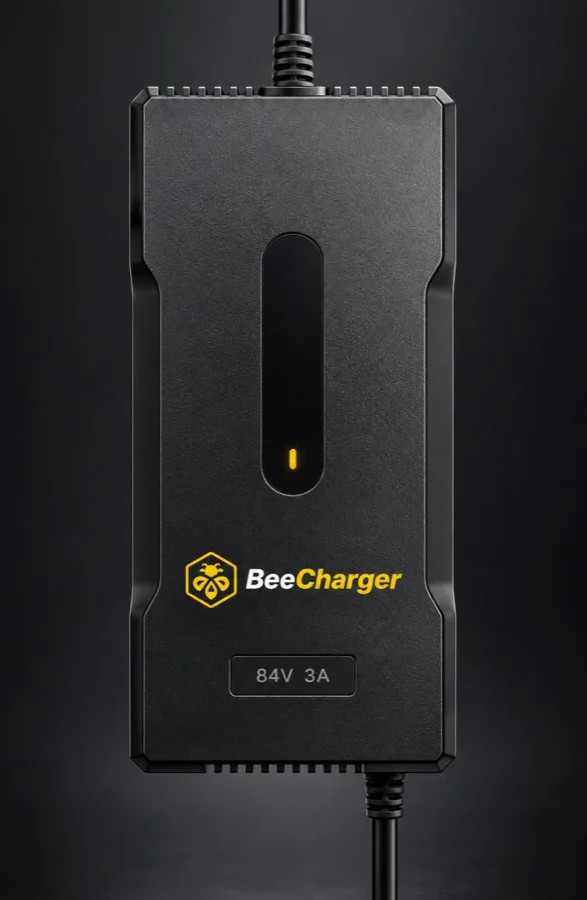
A simple 3 A charger for riders who don’t need fast. It emulates the OEM charger, works on 110 or 220 V, weighs next to nothing, and is the most cost-effective way to charge your bike. Two variants: Ultra Bee and Light Bee 2.

Bee Charger Lite — compact black 3 amp charger with a yellow status light

Concept render — final unit may differ.

3 AGentle & cost-effective

Emulates the OEM charger. Plug in overnight — no settings, no fuss.

Charge current3 A
Input110 / 220 V
VariantsUltra Bee · Light Bee 2 (LB2)
WeightVery light
AvailabilityMade to order, 1–2 weeks · buy now or preorder · $75
Looking for faster? The adjustable Bee Charger runs from 0.2 A up to 17 A — see above.

Small enough to ride with you

Every one of these chargers is built to fit under the seat. That's the whole design constraint: a charger that lives on a workbench only helps you at home, and a charger you can carry turns every outlet you pass into range.

Some models will also accept 100–240 V AC input, which means the same charger works at your house, in an RV, at a friend's garage, at a campsite pedestal, or overseas — and, with the adapter below, at a public EV charging station.

Under-seat fit. Sized and shaped to stow on the bike rather than stay behind.
100–240 V AC input on some models. Home, RV, shop, or abroad on the same unit. Model-by-model input range is published at launch.
Charge away from home. Pair with the J1772 adapter and any public charging station becomes your outlet.
Choose your rate. Dial the current down for a gentle overnight charge or up to 17 A when you need to get back out.
Available to order at launch

J1772 charging adapter

$65USD

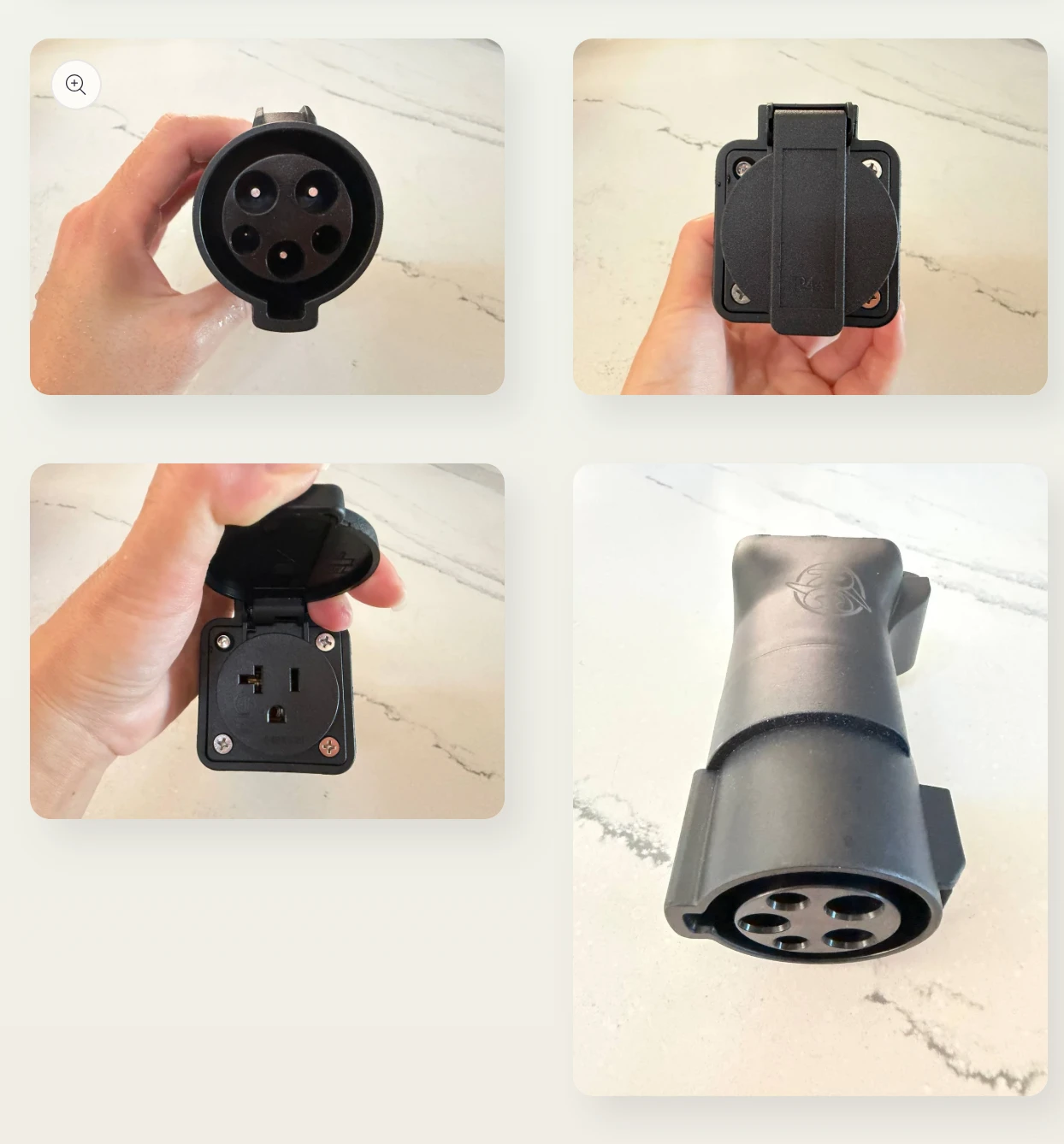
Converts a J1772 public EV charging station into a standard AC outlet. Swipe your card at any ChargePoint, Rivian, or other J1772 station in a parking lot or downtown, plug your charger into the adapter, take up the spot, and charge as fast as your battery's internal BMS will allow.

This is the piece that makes a portable charger genuinely portable. It is the same trick I started doing years ago on the PEV side — plenty of people have copied it since, which is fine by me.

Be a good neighbor about it: don't camp on a station a car is waiting for, and follow the posted rules at the site.

J1772 to AC outlet charging adapter, shown from several angles
Photo: Roger, used with thanks
Charge the right pack with the right charger

These are high-voltage lithium battery chargers. An Ultra Bee charger on a Light Bee 2 pack — or the reverse — is not a minor mismatch. Match the model to the bike and the variant to the connector, and if you are unsure, ask before you plug in.

Order by bike, then by connector. The 2026 Ultra Bee and the Light Bee 2 share a six-pin port but not a voltage.
The BMS has the final say. Charge current is capped by the pack's own limit; a 15 A charger will not force more through than the battery permits.
Don't leave a damaged pack charging unattended. Swollen, wet, crash-damaged or previously overdischarged packs need diagnosis first.
Diagnosis is a separate tool. If the pack itself is the problem, that's what the Bee Battery Reviver is for.

Not ready to order?

Leave an email and pick which one you want. You’ll get one message with news about that model — nothing else. No order is created and no payment is taken. Ready now? Buy or preorder in the shop.

Electric Moto Garage will use this address only for EMG Charger availability and closely related launch updates. Unsubscribe anytime. Questions, or want a photo of your charge port identified: hello@electricmotogarage.com
Charge connector